Academic Departments
From the Qur ’an and Hadith to modern knowledge, every field plays a special part in Islamic education and training.
Hifz and Tajweed
The Holy Quran is the foundation of Islam. Learning to read it, memorizing it and reciting it according to the rules of Tajweed are fundamental needs of every Muslim. Quran schools and Islamic seminaries have therefore always given special attention to Hifz and Tajweed. In recognition of this importance, Jamia Darululoom Sukkur established a dedicated Department of Hifz and Tajweed.
In addition to the main centre, the following Quran schools operate under the Jamia's supervision:
- Madrasah Rawdat al-Quran, Khaif Masjid, Bhutta Road, Sukkur
- Madrasah Dar al-Quran, Sukkur Township, Sukkur
- Madrasah al-Huda, Memon Mohalla, Sukkur
- Maktab Taleem al-Quran, Muhammad Masjid, Workshop Road, Sukkur
- Markaz Taleem al-Quran, Aqsa Masjid, Sukkur
- Maktab Jami Masjid Mehrab, Sukkur Township, Sukkur
Admission requirements
- Applicants must have a strong memory and sufficient mental maturity for Hifz.
- Applicants must be at least 7 years old.
- Applicants must already be able to read the Holy Quran correctly from the text.
- Mental aptitude, conduct, character and general presentation will also be assessed.
Dars-e-Nizami (Alim Programme)
Dars-e-Nizami is a nine-year Alim programme divided into four stages:
Thanawiyyah Ammah (equivalent to matriculation)
Duration: three years. The first two years focus on Arabic morphology and syntax. The third year covers Quranic recitation, Tafsir, Hadith, fiqh, morphology, syntax, Arabic literature, logic and Sirah.
Thanawiyyah Khassah (equivalent to intermediate)
Duration: two years. Subjects include Quranic Tafsir, Hadith, fiqh, usul al-fiqh, Arabic syntax and literature, logic and Arabic composition.
Aliyah (equivalent to a BA)
Duration: two years. Subjects include Tafsir, Hadith, fiqh, usul al-fiqh, Islamic inheritance, Arabic literature, theology, rhetoric, philosophy, history, composition and usul al-Hadith.
Alimiyyah (equivalent to an MA)
First year: Tafsir, usul al-Tafsir, Hadith, usul al-Hadith, fiqh, astronomy, geography, modern economics and the refutation of Qadianism. Second year: Dawrah Hadith — an intensive study of Sahih al-Bukhari, Sahih Muslim, Jami al-Tirmidhi, Sunan Abi Dawud, Sunan al-Nasa'i, Sunan Ibn Majah, the Muwattas of Imam Malik and Imam Muhammad, and other major Hadith works.
Admission requirements
- Applicants must have a strong memory and sufficient mental maturity.
- Applicants must be at least fourteen years old and have passed middle school.
- Applicants to any level must be able to recite the Holy Quran with Tajweed.
- Admission to a particular level requires satisfactory marks in the preceding level.
- The entrance test will be based on selected books from the preceding level.
- Mental aptitude, conduct, character and general presentation will also be assessed.
Ma'had al-Lughah al-Arabiyyah
Students of Dars-e-Nizami study Arabic texts for eight or nine years, yet many do not acquire confidence in speaking or writing the language. An Arabic-speaking environment is essential for developing practical fluency.
To meet this need, a growing number of Islamic seminaries teach the full Dars-e-Nizami curriculum through Arabic in programmes commonly known as a “Ma'had”.
Jamia Darululoom Sukkur established its Ma'had department two years ago. The programme currently runs through the Thanawiyyah Ammah level and is planned to be extended to the final year.
Admission requirements
- Applicants must have a strong memory and sufficient mental maturity.
- Applicants must be at least fourteen years old and have passed middle school.
- Applicants must be able to recite the Holy Quran with Tajweed.
- Applicants must have passed the preceding level with satisfactory marks.
- The entrance test will be based on selected books from the preceding level.
- Mental aptitude, conduct, character and general presentation will also be assessed.
Girls' Education Department
Women have a vital role in building righteous families and a sound society. A righteous mother's care is among the greatest schools of human formation. For this reason, Jamia Darululoom Sukkur established a dedicated girls' department from its earliest days.
The department offers the Alimah programme according to the curriculum of Wifaq-ul-Madaris al-Arabia Pakistan. Subjects include the Quran, Hadith, fiqh, usul al-fiqh, inheritance, rhetoric, Arabic morphology and syntax. Hifz and Nazirah Quran are also taught, together with sewing, embroidery, cookery and Fatimi courses.
Institutes affiliated with the Jamia
Jamia Fatimah al-Zahra for Girls — Usmania Masjid
The main girls' campus offers Dars-e-Nizami, Hifz, Nazirah, Tajweed, sewing and cookery for girls and adult women. The morning shift runs from 8:00 a.m. to noon.
Al-Markaz al-Islami Madaniyyah for Girls
Near City Point Gate, Adam Shah Colony. The evening shift offers Dars-e-Nizami through the Aliyah level, Hifz, Tajweed and Nazirah.
Madrasah al-Huda for Girls — Memon Mohalla
The evening shift offers Dars-e-Nizami through the Aliyah level, Hifz, Tajweed and Nazirah.
Thousands of women have benefited from the Fatimi, cooking and sewing courses, while hundreds have graduated from the Dars-e-Nizami and Hifz programmes.
Admission requirements
- Applicants must have a strong memory and sufficient mental maturity.
- Applicants to Dars-e-Nizami must be at least fourteen years old and have passed middle school.
- Applicants must be able to recite the Holy Quran with Tajweed.
- Applicants must have passed the preceding level with satisfactory marks.
- An entrance test and an assessment of conduct and character will be conducted.
Adult Education Department
As Muslims, acquiring a sound understanding of the faith and the meanings of the Quran is both a religious duty and a natural need. Jamia Darululoom Sukkur has therefore designed a short course for adults with busy schedules.
The curriculum covers basic Arabic grammar, translation and Tafsir of the Quran, Hadith, Islamic beliefs, everyday transactions, social conduct and ethics. Students, businesspeople, employees and people from many other walks of life benefit from the programme.
Time: From Maghrib to Isha.
Who may enrol
The adult education programme is open to people from all walks of life, including students, businesspeople and employees. Classes are held between Maghrib and Isha.
Specialization Programmes
After completing Dars-e-Nizami, graduates may pursue advanced specialization in the following fields:
Specialization in Ifta and Research
Advanced study of fiqh, usul al-fiqh and Hadith, preparing scholars to issue fatwas, undertake research and serve in a Darul Ifta.
Specialization in Arabic
Advanced training in Arabic speaking, writing, translation and teaching, with particular emphasis on Arabic literature and syntax.
Specialization in English
Advanced English-language training for the accurate translation and publication of Islamic material.
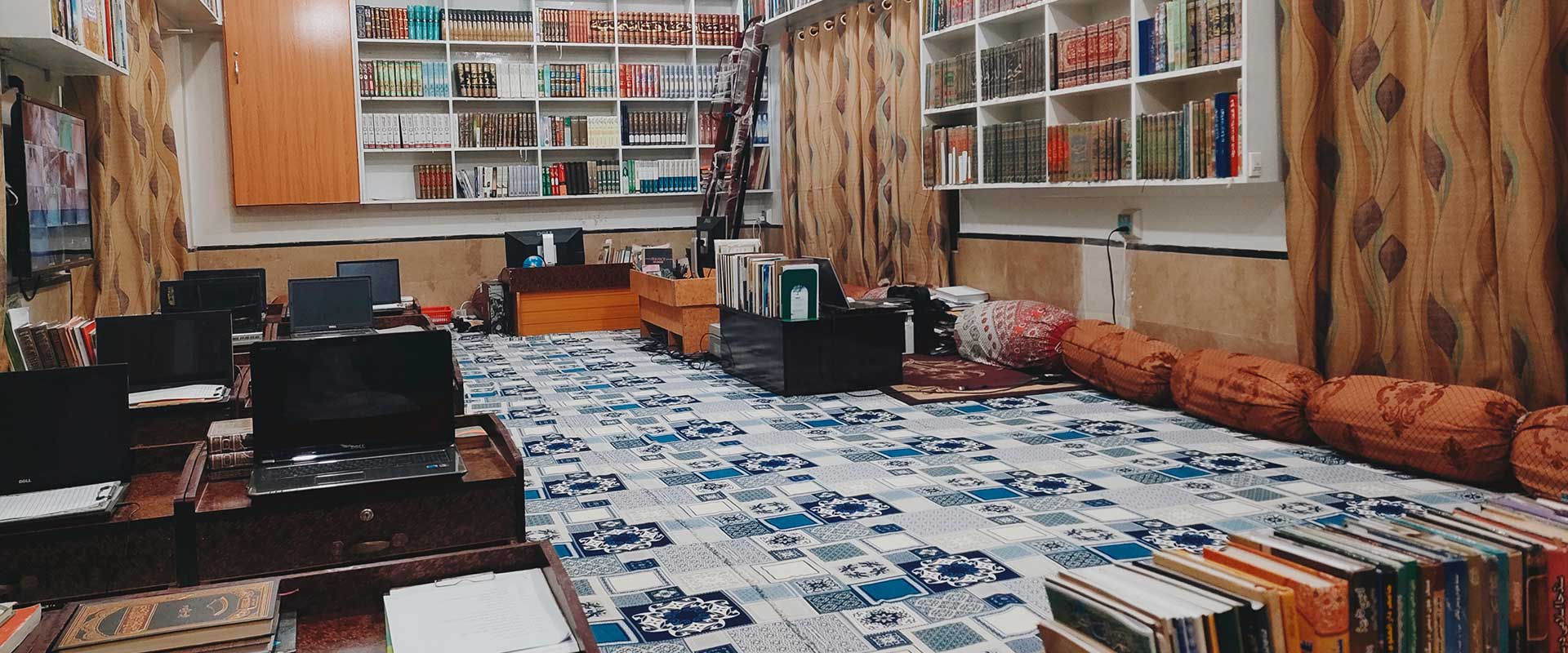
Specialization in Computer Science
Training in computer science and technology to support Islamic publishing and service through modern media.
Contact the Jamia administration for admission requirements and further details about these programmes.
Contemporary Studies
Alongside Islamic education, Jamia Darululoom Sukkur gives due attention to contemporary fields of knowledge so that students are equipped to meet the needs of the present age.
- Foundational computer and technology education
- English- and Urdu-language proficiency
- Digital publication and multimedia production for Islamic material
- Connecting Islamic learning with contemporary needs
Courses are offered according to students' needs and the Jamia's academic plans.
Department of Medicine
History shows that medicine has long been closely connected with the Islamic sciences. Imam al-Shafi'i said: Al-'ilmu 'ilman: 'ilm al-adyan wa 'ilm al-abdan — knowledge is of two kinds: knowledge of religion and knowledge of the human body.
Earlier Muslim scholars were accomplished not only in Tafsir, Hadith and fiqh, but also in medicine. Scholars today have a responsibility to preserve and carry this legacy forward.
The Department of Medicine was established in 2017 through the special interest of the head of the Jamia, Mufti Nazir Ahmed, and in consultation with Hakim Tariq Mahmood Chughtai. Alongside the study of therapeutics, materia medica and diagnosis, students receive practical clinical training.
Curriculum: Sharh Asbab, Taj al-Aqaqir and Tashrih al-Abdan. More than 56 students have completed or benefited from the programme to date.
Admission requirements
Medicine is taught at the Sabi'ah level only. Applicants must have successfully completed the Sadisah level.
Department of Tarbiyah
Tarbiyah is one of the central purposes for which Jamia Darululoom Sukkur was established. The Jamia's motto is “Knowledge and practice” — knowledge accompanied by action, and education accompanied by moral and spiritual formation.
A comprehensive programme has been developed to help students live in accordance with the Quran and Hadith. In their free time, students also take part in da'wah activities, conveying the message of Islam with compassion and wisdom and delivering Friday talks in different localities.
In addition, the weekly Bazm-e-Usmani programme and the Usmani Ilm-o-Qalam Sangat society train students in public speaking and writing.
Daily tarbiyah programme
- Waking before the Fajr adhan to offer Tahajjud
- Morning adhkar and Quran recitation after Fajr
- Offering the Ishraq prayer
- Reciting Surah Ya-Sin after Zuhr
- A lesson from Alaykum bi Sunnati, Adab al-Mu'asharat or Hayat al-Muslimin after Asr
- Offering Awwabin and reciting the evening adhkar after Maghrib
- A gathering of dhikr after Isha
- Reciting Surah al-Mulk before sleep
- Observing the Sunnahs and Islamic manners throughout the day
- Developing the habit of wearing the turban and greeting others with salam
- A gathering for salawat after Asr on Fridays
- Encouragement to fast on the Ayyam al-Bid
Dar al-Ilm wal-Tahqiq
Dar al-Ilm wal-Tahqiq was established under the Jamia's supervision to undertake scholarly research and authorship. Its principal aim is to critically edit the Arabic manuscripts of Sindh's eminent scholars according to contemporary academic standards and make this intellectual heritage available to the public.
The following works associated with the Jamia have been published by various institutions:
- Tuhfat al-Talibin
- Bidayat al-Nahw
- A Gift for Women
- Tashil al-Wusul ila Ilm al-Usul
- The Fragrance of the Prophetic Garden
Publications of Dar al-Ilm wal-Tahqiq
- Al-Ilm Quarterly special issue: “Fiqh and Fatwa in Sindh”
- Orchard-Leasing Contracts — Islamic guidance on contracts involving mango, banana and date orchards
- Bidayat al-Nahw (Sindhi and Urdu)
- Principles of Inheritance
- The Religious and Academic Services of Jamia Darululoom Sukkur
Rabita al-Masajid
Throughout Islamic history, the mosque has served an exceptional role as a centre of education, tarbiyah, the remembrance of Allah and communal decision-making. Regrettably, this wider role has become increasingly limited in the present day.
Rabita al-Masajid is a practical initiative to revive the mosque's historic role. Affiliated mosques organize congregational prayers, Quran lessons, adult education courses, instruction in the correct performance of salah and community reform programmes. They also help resolve disputes in the light of the Quran and Hadith.
Mosques Affiliated with Rabita al-Masajid
-
01
Jami Masjid Usmania Barrage Colony, Sukkur
-
02
Markazi Jami Masjid Riaz al-Jannah Government Housing Society
-
03
Jami Masjid Farhad Near IBA University
-
04
Jami Masjid Sector One, Sukkur Township
-
05
Jami Masjid Siddiq-e-Akbar Military Road
-
06
Muhammad Masjid Workshop Road
-
07
Aqsa Masjid Allied School, Barrage Colony
-
08
Jami Masjid Mehrab Sector 5, Sukkur Township
-
09
Jami Masjid Zul-Noorain Mawi Society, 100 Foot Road
-
10
Jami Masjid Rahmat lil-Alamin Sindhi Society
-
11
Jami Masjid Abbas Revenue Colony
-
12
Jami Masjid Shan-e-Mustafa PCB Ground
-
13
Jami Masjid Riaz al-Jannah Mehran Society
-
14
Jami Masjid Aisha Marhaba Society
-
15
Jami Masjid Dua Hamza Society
Al-Ilm Sukkur Quarterly
Islamic seminaries have a longstanding tradition of publishing monthly, quarterly and annual journals for the religious guidance and moral reform of the public. Religious and revivalist writing has likewise held a prominent place in Sindh's journalistic heritage. Since 2012, Jamia Darululoom Sukkur has regularly published the Sindhi-language Al-Ilm Quarterly. It features Quranic commentary, Hadith lessons, answers to Islamic legal questions, accounts of senior scholars, and scholarly, literary, reformative and research articles.
The journal has also published a special issue entitled “Fiqh and Fatwa in Sindh”.
Entry or Information.
Get in touch to find out more about any of the fields or to enter